When homeowners think about exterior problems, they usually focus on what they can see. Peeling paint. A leaking corner. A sagging gutter. A soft trim board. A stained ceiling. A draft near a wall.
But the real issue is often not the material that looks bad. It is the water path behind it.
Water management is the most important exterior system because water is one of the biggest threats to a home’s durability and service life. Building-science guidance treats moisture as a major limiter of building durability, and notes that problems happen when moisture enters assemblies faster than they can dry. For walls and roofs, rain is often the largest single moisture source.
If a home does not manage water correctly, everything behind the visible surface starts playing defense. Trim can rot. Siding can swell or loosen. Paint can fail early. Fascia can soften. Insulation can lose performance. Small leaks can become bigger repairs. And the worst part is this: the area that looks damaged is not always the place where the water actually got in.
What Homeowners Usually Notice
Most water-management problems do not introduce themselves politely.
Homeowners usually notice one of these first:
- Peeling or bubbling paint
- Soft or swollen wood trim
- Staining on siding, fascia, or ceilings
- Gutters that overflow even after cleaning
- Caulk joints that keep reopening
- A leak that “was repaired” but comes back
- Drafts or temperature swings near exterior walls
- Moldy smells in certain rooms or attic spaces
- Siding or trim that looks wavy, loose, or prematurely aged
The visible symptom is real, but it is usually just the messenger. The real problem is how the home is handling water, or failing to.
What It Usually Means
A home’s exterior is not just there to look nice. It is a working system.
Roofing, flashing, siding, trim, soffit, fascia, gutters, sealants, ventilation, drainage, and even insulation all play a role in how a home handles water. When one part breaks down, the others often feel it.
That is why a gutter problem can turn into fascia rot.
That is why a roof transition issue can show up as damaged siding.
That is why a small failed flashing detail can become interior staining months later.
That is why repainting a surface sometimes fixes nothing at all.
Water does not care whose department it is. It follows gravity, pressure, openings, seams, and weak transitions. If the system is not designed, installed, or maintained well enough to manage that movement, the house starts absorbing the cost.
What Causes Water Management Problems
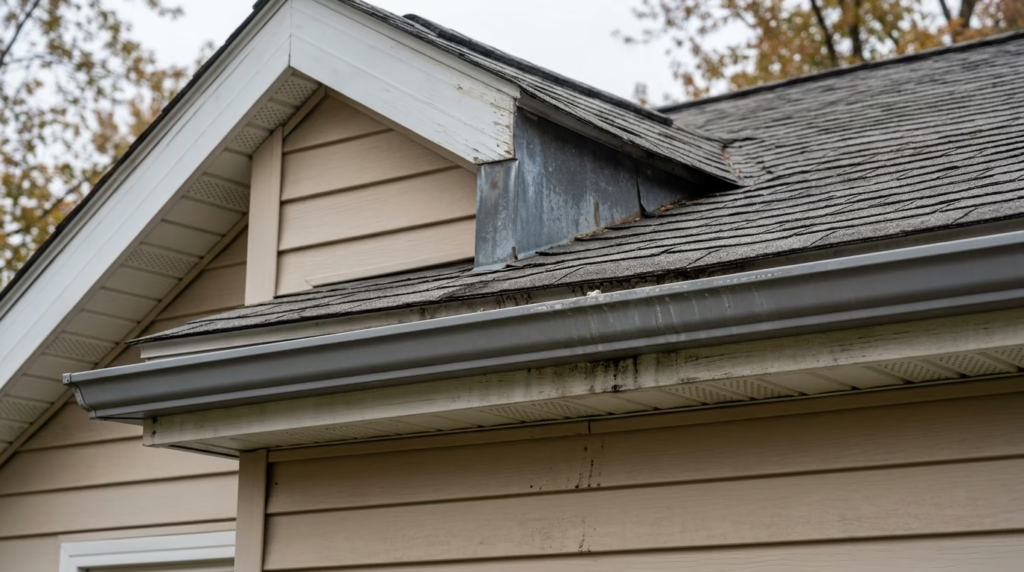
Poor flashing details
Flashing is one of the quiet heroes of exterior performance. When it is missing, poorly lapped, damaged, or interrupted, water can move behind finishes instead of being directed back out where it belongs.
This is where a lot of repeat failures are born. The outside may look sealed, but the water path is still wrong.
Roof-to-wall and wall-to-trim transitions
Transitions are where homes get tested.
Anywhere one material stops and another begins, the risk goes up. Rooflines meeting walls, windows meeting siding, fascia meeting gutters, trim meeting cladding, chimneys meeting shingles, and penetrations through the wall all need the right detail. When those details are weak, water wins the argument.
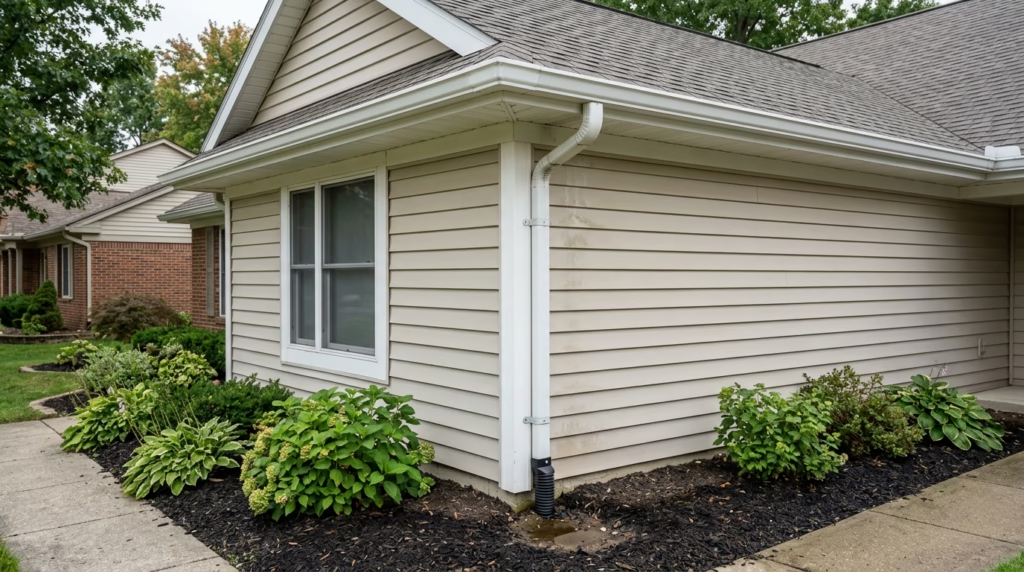
Bad gutter drainage
Gutters are not just accessories hanging off the roofline. They are part of the drainage system.
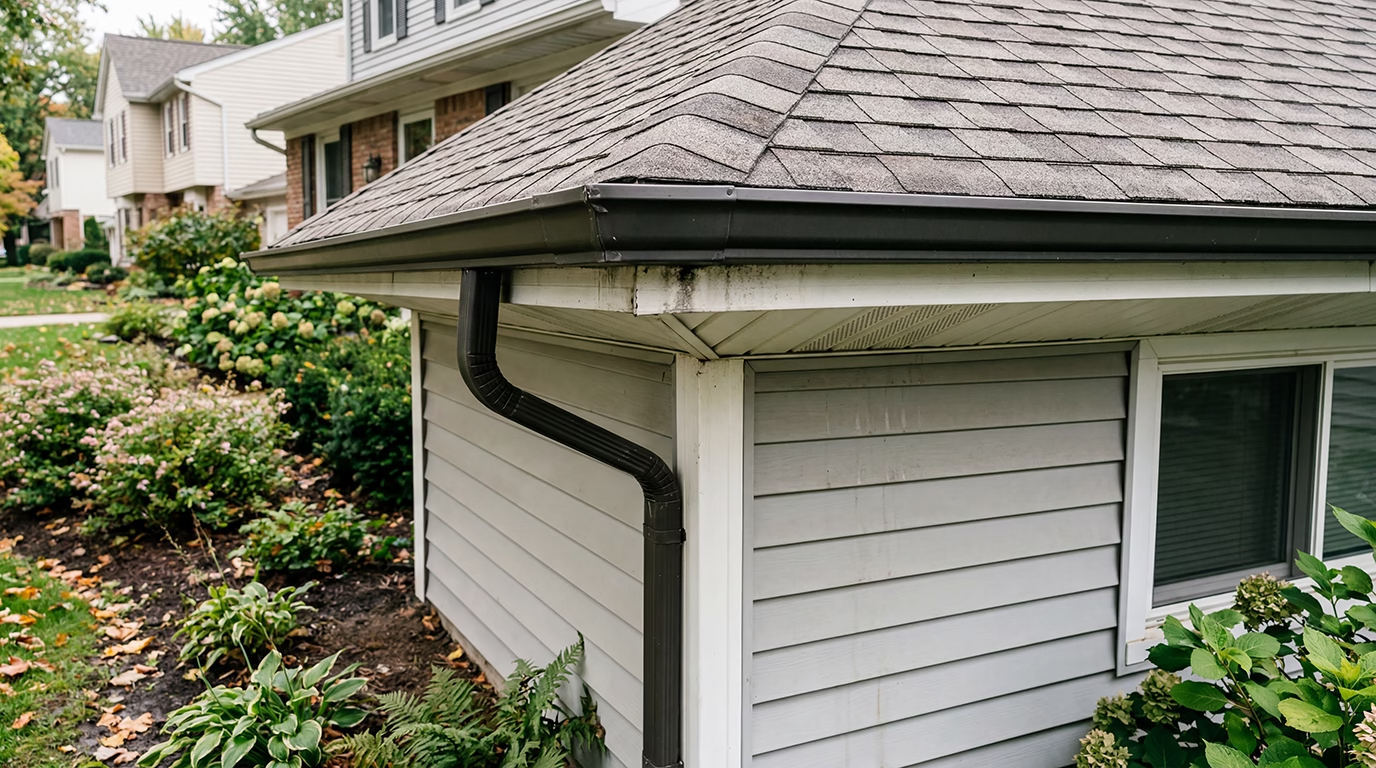
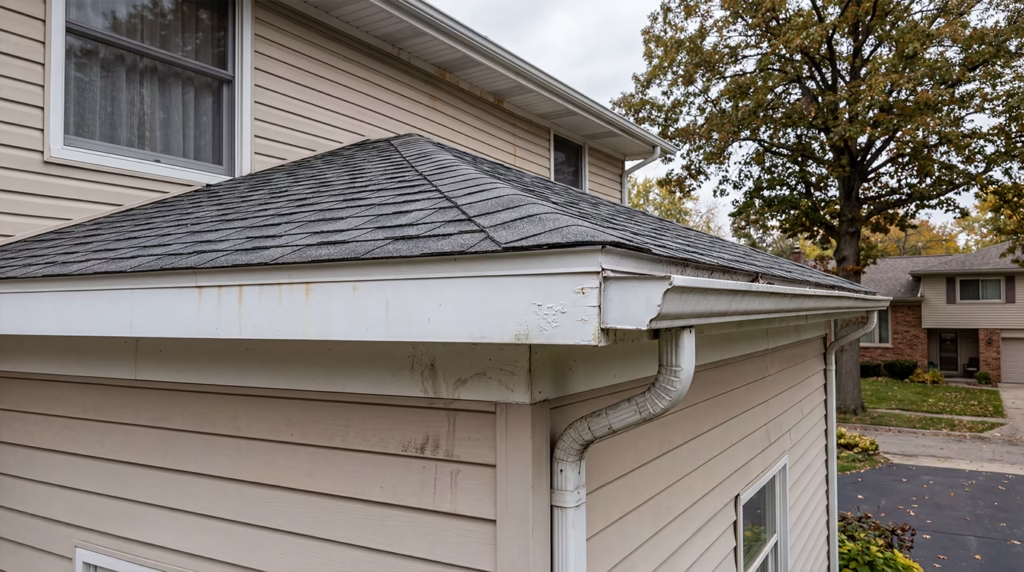
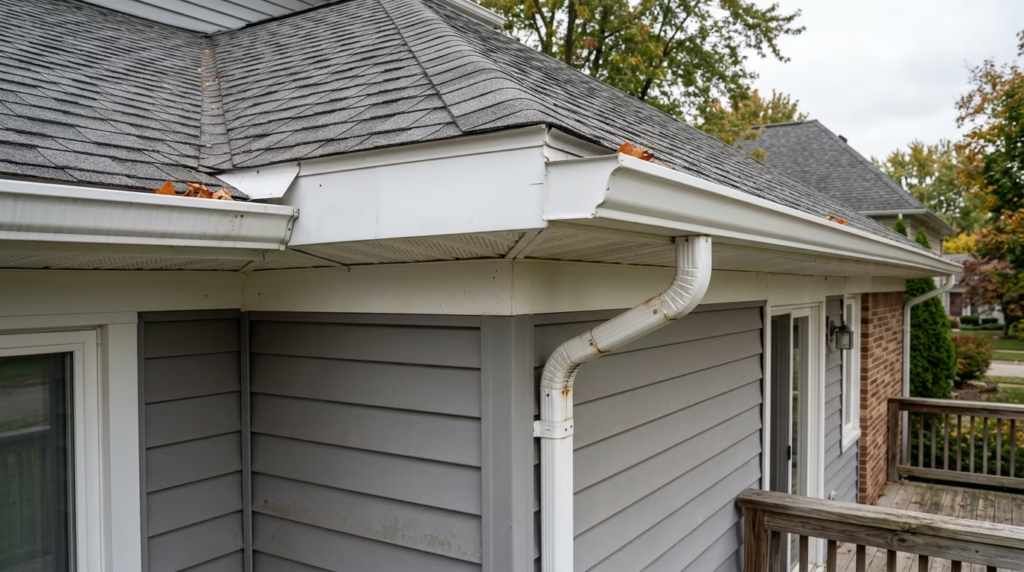
If gutters are undersized, poorly pitched, loose, clogged, or pulling away from the fascia, water can overshoot, back up, or run behind them. That repeated wetting can damage fascia, soffit, trim, siding, foundations, and sometimes interior areas too.
Trapped moisture
A home does not only need to block water entry. It also needs to dry.
If moisture gets in and cannot get back out, materials stay wet longer than they should. That is when finishes break down, wood deteriorates, and hidden damage starts building momentum.
Building-science guidance puts it pretty simply: moisture problems happen when wetting beats drying.
Ventilation and air leakage issues
Not every moisture problem starts with visible rain entry.
Warm interior air can move into colder assemblies. Humidity can build where it should not. Attics can perform poorly. Poor airflow can make surfaces stay damp longer. This is where people sometimes think they have a roof problem, a paint problem, or an insulation problem, when really they have a moisture-management problem wearing a disguise.
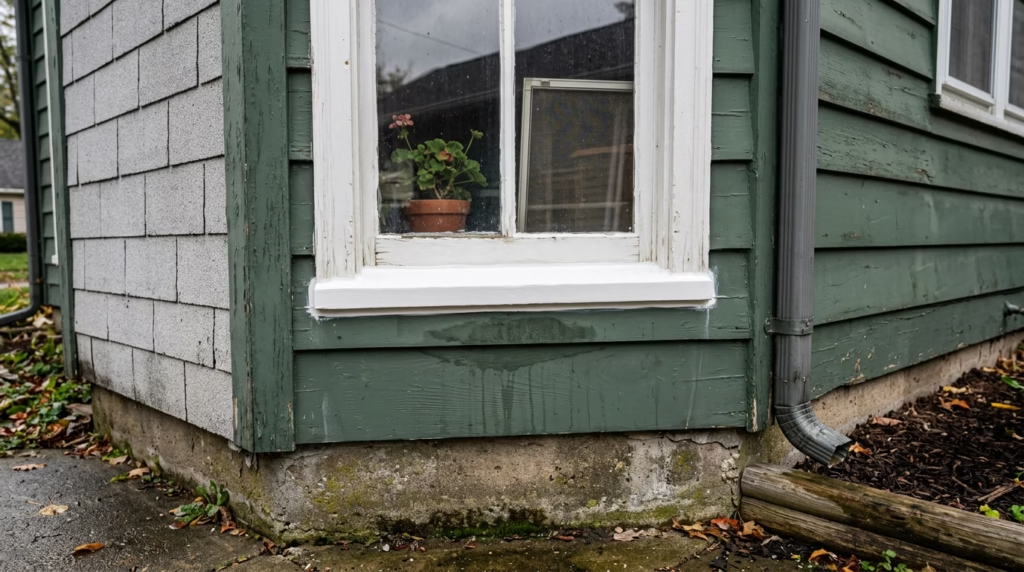
Surface fixes over system failures
This one is common.
A section gets caulked. A board gets painted. A leak gets “patched.” A stain gets covered.
The house looks better for a minute, but the water path is unchanged.
That is how homeowners end up paying for the same area two or three times.
Why It Gets Missed
Water management problems get missed because people often diagnose the symptom instead of the system.
- A soft trim board looks like a trim issue.
- A stained ceiling looks like a roof issue.
- A peeling corner looks like a paint issue.
- A sagging gutter looks like a hanger issue.
Sometimes those things are true. A lot of times, they are only the last visible stop in a longer chain.
The hard part about moisture is that it moves. It can travel down, sideways, inward, behind, and through. It changes form. It hides in assemblies. It follows the easiest path, not the most obvious one. That makes diagnosis trickier than most homeowners expect.
This is also why isolated repairs can fail. If the surrounding system is still sending water to that area, the “fix” becomes a pause button, not a solution.
What Can Happen If Ignored
Ignoring water-management problems rarely makes them cheaper.
What starts as a stain or soft spot can turn into:
- Wood rot in trim, fascia, sheathing, or framing
- Paint failure that keeps returning
- Siding deterioration or loose cladding
- Wet insulation and reduced thermal performance
- Interior staining and finish damage
- Mold risk from ongoing moisture exposure
- Hidden structural repairs that grow before they are discovered
EPA guidance is blunt on this point too: the key to mold control is moisture control, and water-damaged areas should be dried quickly after wetting events.
The main lesson is simple. Water does not usually stay small because we asked nicely.
Repair vs. Replace
This is where homeowners need clear thinking, not wishful thinking.
When repair may make sense
A focused repair can make sense when:
- The damage is truly isolated
- The surrounding materials are still sound
- The water source is clearly identified
- Flashing, drainage, and transition details can be corrected properly
- The repair can be done in a way that is durable and responsible
A real repair solves the water path, not just the scar it left behind.
When replacement is smarter
Replacement is often the better move when:
- Damage is repeated or spreading
- Surrounding materials show workmanship or installation issues
- Multiple parts of the system are interacting badly
- There is finish mismatch risk and no durable way to blend
- The assembly has broader hidden-condition risk
- Touching one failed area transfers liability into a bigger broken system
This is where a “small repair” can become expensive denial dressed up as savings.
When temporary stabilization is the honest answer
Sometimes the right answer is not a permanent spot fix. Sometimes it is temporary stabilization while the broader assembly is evaluated and a real plan is made.
That may not be the answer people want in the moment, but it is often the answer that protects the house best.
What a Proper Evaluation Should Check
A proper exterior evaluation should not stop at the damaged spot.
It should check:
- Where water is likely entering
- How water is being directed once it lands on the house
- Rooflines, valleys, and discharge points
- Flashing details at walls, windows, doors, chimneys, and penetrations
- Gutter pitch, fastening, capacity, and overflow patterns
- Fascia, soffit, and trim condition
- Siding condition and movement
- Sealant condition and whether sealant is being asked to do too much
- Signs of trapped moisture or poor drying potential
- Ventilation and airflow concerns
- Whether the visible damage matches the probable source
That is the difference between diagnosing a symptom and understanding the system.
The Bottom Line
Water management is the most important exterior system because almost every other part of the exterior depends on it.
When a home manages water well, the rest of the materials have a fighting chance to perform the way they were supposed to. When it does not, the failures start stacking. Not all at once. Just enough to keep draining time, money, and patience.
A smart homeowner does not just ask, “What looks bad?”
They ask, “Why is this area getting wet in the first place?”
That question usually leads to better decisions.