

Exterior Renovation FAQs for Michigan Homeowners
Most exterior problems do not start where you first notice them. A leak may show up at a ceiling stain, but the real issue might be flashing, ventilation, drainage, or a failed transition higher up the home. Rotten trim may look like a paint issue, but the root cause is often repeated water exposure, trapped moisture, or poor detailing.
This page is built to help homeowners understand what common exterior problems usually mean, what signs to watch for, and when a repair makes sense versus when a larger renovation is the smarter long-term move. Our goal is simple: give you better information before important decisions need to be made.
Planning & Project
How do I know if my issue is cosmetic or a real system problem?
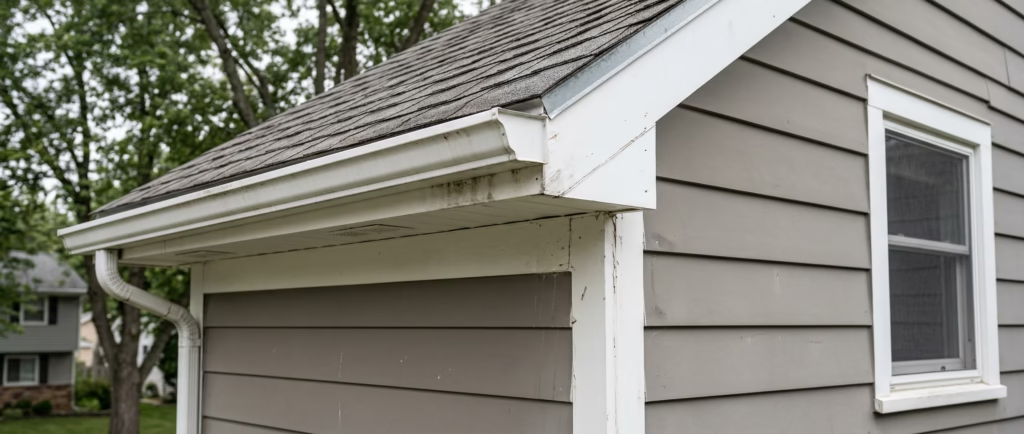
If the same area keeps failing, gets soft, opens up, stains repeatedly, or changes during heavy rain or freeze-thaw cycles, it is probably more than cosmetic.
Cosmetic issues usually stay surface-level. System problems tend to repeat, spread, or affect multiple materials at once. When siding, trim, gutters, flashing, paint, and moisture clues all point to the same area, that is usually your sign the home is telling a bigger story.
What is the best order for exterior renovation work?
Start with the parts that manage water and protect the structure first. That usually means diagnosing roofing, flashing, drainage, trim, rot, ventilation, and envelope problems before moving into cosmetic finishes.
A good rule is simple: do not spend finish money over unfinished failure. New paint over wet trim, new gutters over rotten fascia, or new siding over bad wall prep is just expensive denial wearing better clothes.
Why do spot repairs sometimes fail on exterior projects?
Because the isolated area you can see is often connected to a larger exterior system you cannot. A small opening may be fed by bigger issues in runoff, detailing, airflow, or surrounding material condition.
Spot repairs are useful when the surrounding system is sound. They fail when they are asked to carry the burden of a bigger unresolved problem.
Roofing & Leak
Why is my roof leaking even though I only see damage in one room?
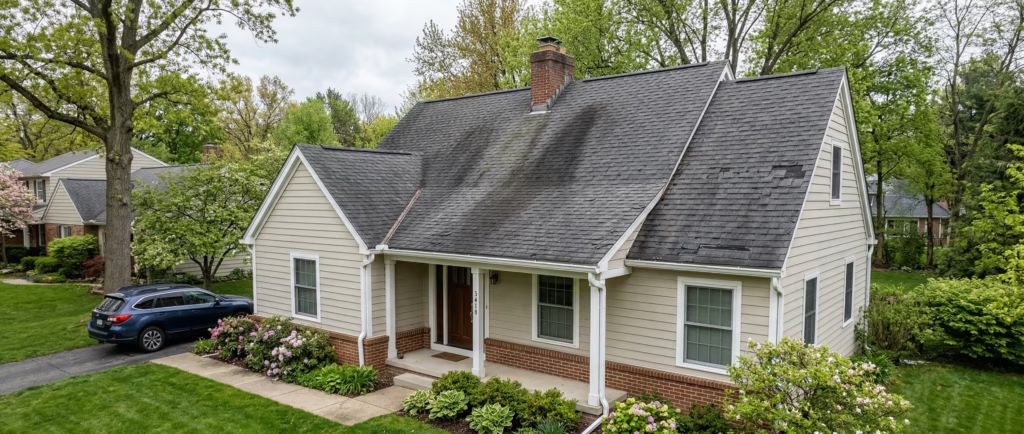
Roof leaks often show up far away from where water first entered. Water can travel along roof decking, framing, insulation, and drywall before it finally shows itself inside the home.
That is why ceiling stains, wall bubbling, or damp insulation do not automatically tell you where the roof failed. The real issue could be flashing at a chimney, a wall transition, a vent, a valley, or another detail higher up the system. A good exterior evaluation traces the water path, not just the visible symptom.
When should a roof be repaired instead of replaced?
A repair usually makes sense when the issue is isolated, the surrounding roofing system is still in serviceable shape, and the failure can be corrected without creating a patchwork of new problems.
Replacement becomes the smarter move when the roof has multiple failure points, repeated leak history, widespread material wear, poor ventilation, or old installation details that keep creating new issues. The real question is not “Can this be patched?” It is “Will this still be a good system after the patch is done?”
Why do leaks keep coming back after a previous repair?
Because many repairs only treat the symptom. If the actual cause is bad flashing, poor drainage, trapped moisture, or a weak transition detail, the water just finds a slightly different route next time.
This is one of the strongest messages you should keep pushing on the page: repeat leaks are usually a system problem, not a one-spot problem. Your existing educational content already leans into this hard, and it should.
Gutters, Fascia & Drainage
How much are gutter covers?
“Gutter covers” is just another name for gutter guards, and pricing depends on a few variables we can’t see from a photo alone. The biggest factors are the linear footage, the height and access, the roof type and water volume, and whether the project is a new gutter install or a retrofit onto existing gutters. In Michigan (Zone 5), freeze-thaw cycles and ice loads also matter, so we price based on installing a system that will actually perform, not just “covering the hole.” If you can share a few photos and the sections you want protected, we can usually provide a rough range, and then confirm exact pricing after verifying the gutters and roof edge details on site.
Can you install gutter guards on my existing gutters?
Yes, gutter guards can often be installed on existing gutters, as long as the current gutter system is a good candidate. The key is whether the gutters are installed tight enough to the roof edge to allow the guard to tuck correctly under the drip edge and shed debris the right way. We also check for common retrofit issues like winter distortion, loose hangers, and leaking miters/end caps/outlets, because those can affect fit, long-term sealing, and performance. Many companies will install guards on anything because it’s quick, but we verify the details first so the guard doesn’t end up flat, back-pitched, or creating new maintenance problems. If your gutters aren’t suitable as-is, we’ll explain why and what would be required for a proper installation.
What causes gutters to sag or overflow?
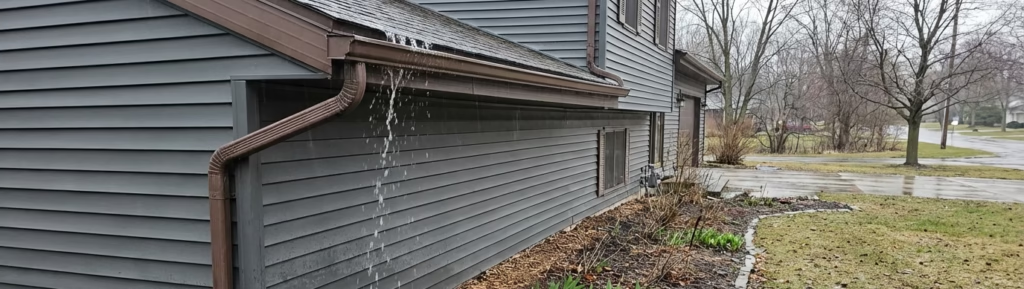
Sagging and overflow usually come from one or more of these issues: improper pitch, weak attachment, too much debris, too much roof water volume, undersized system design, or failing fascia behind the gutter.
If water is running over the front edge, shooting past corners, or slipping behind the gutter, the gutter is telling you something. The problem may not be “the gutter” alone. It may be the way the gutter, fascia, roof edge, and drainage path are working together or failing together.
Why is water getting behind my fascia boards?
Water usually gets behind fascia because the roof edge and gutter system are not controlling runoff the way they should. That can happen from poor drip edge integration, loose gutters, overflow, clogged sections, ice history, or repeated splash-back.
Once water gets behind the gutter line, the fascia and the wood behind it can stay wet for long periods. That is when rot, paint failure, fastener loosening, and staining start to show up.
Are gutter guards worth it?
Sometimes yes, sometimes no. Gutter guards can reduce debris buildup and cut maintenance, but they are not magic and they are not automatically a fix for poor gutter design.
If the existing gutter system is undersized, pitched poorly, attached to weak fascia, or handling too much water volume, adding a guard on top does not solve the root problem. Guards are most helpful when the base gutter system is already right and the goal is reducing maintenance, not hiding a bad setup.
Siding, Trim & Wood Rot
Why is my siding rotting near the roofline?
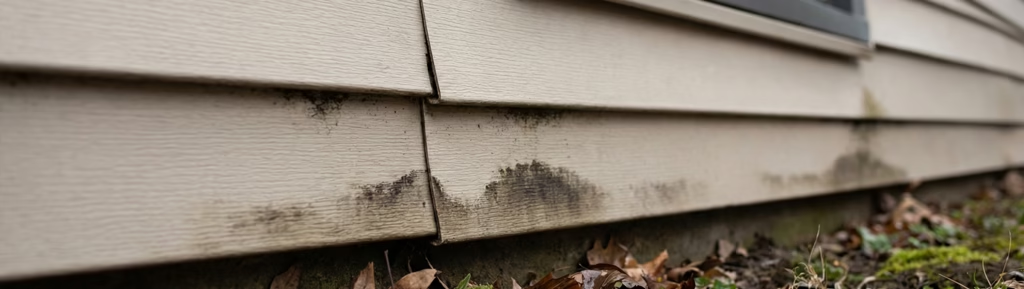
Siding near the roofline often fails because that area takes constant water exposure. Roof runoff, splash-back, poor kick-out flashing, weak transitions, failed caulking, and trapped moisture can all break down the wall assembly over time.
When siding starts softening or separating near a roof intersection, the visible damage is usually only part of the story. The real concern is what repeated moisture may have done behind the siding, trim, and sheathing. That is why this kind of issue should be evaluated as a wall system, not treated like a cosmetic patch.
How can I tell if trim or fascia has hidden rot?
Soft spots, swelling, peeling paint, dark staining, joint separation, and recurring caulk failure are all warning signs. If trim keeps opening up or paint keeps failing in the same area, something underneath is usually staying wet longer than it should.
Hidden rot is common around roof edges, gutters, windows, doors, and lower wall areas where water repeatedly hits or gets trapped. By the time the wood feels soft, the problem has usually been active for a while.
Why does exterior paint keep failing in the same spots?
Paint failure is often blamed on paint, but the real issue is usually moisture, movement, or poor surface conditions. If water keeps reaching the same trim boards, joints, or lower wall sections, no coating system will hold up the way it should.
Ventilation & Insulation
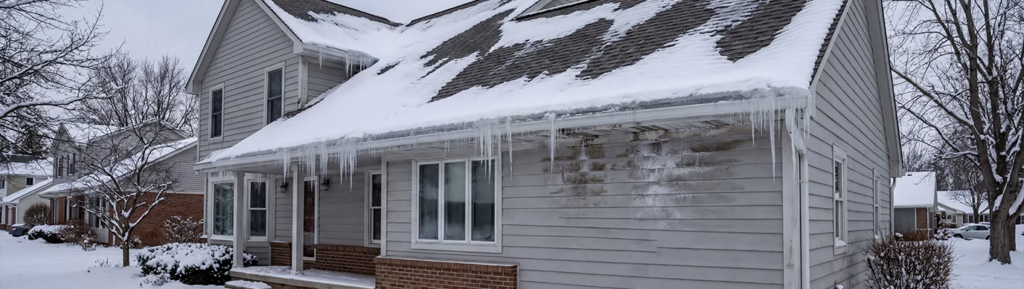
Does attic ventilation affect roof life and moisture problems?
Absolutely. Attic ventilation affects heat buildup, moisture behavior, and overall roof system performance. If the attic is not moving air the way it should, the roof can run hotter, moisture can linger longer, and materials can age under worse conditions.
It also affects comfort and can feed problems that homeowners blame on other things. Your own educational material already makes this point well: insulation alone does not fix a system if airflow is wrong.
Will adding insulation fix my comfort problem?
Not by itself, not always. Insulation matters, but comfort issues often come from a combination of insulation, air leakage, blocked airflow, weak ventilation pathways, or moisture problems.
That means a house can have “more insulation” and still perform badly. Better FAQ content should make homeowners understand that performance comes from balance, not just adding more material wherever there is open space.
Why do I have moisture issues in the attic if my roof is not leaking?
Because not all attic moisture comes from rain. Warm interior air, weak ventilation, blocked soffits, exhaust issues, and poor air sealing can all create moisture buildup without a classic roof leak.
That is why attic staining, damp insulation, or mold-like growth should not automatically be treated like a roofing-only issue. Sometimes the roof is fine and the problem is airflow and moisture management.