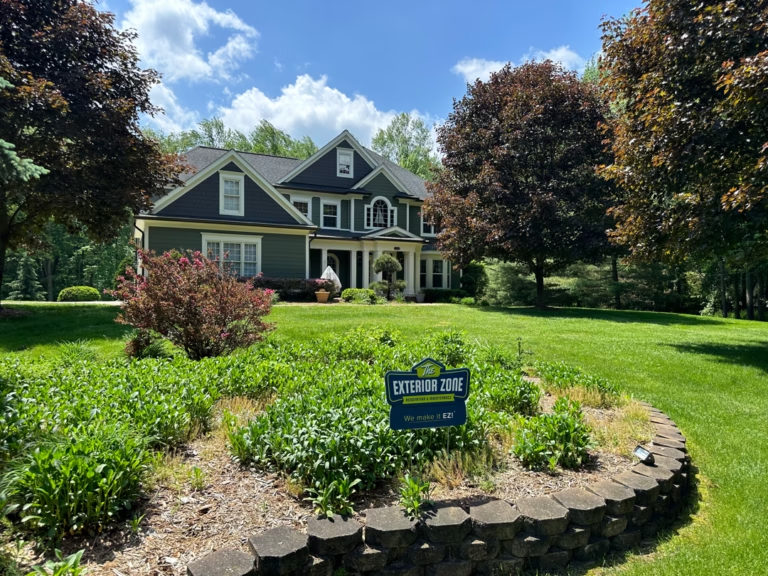
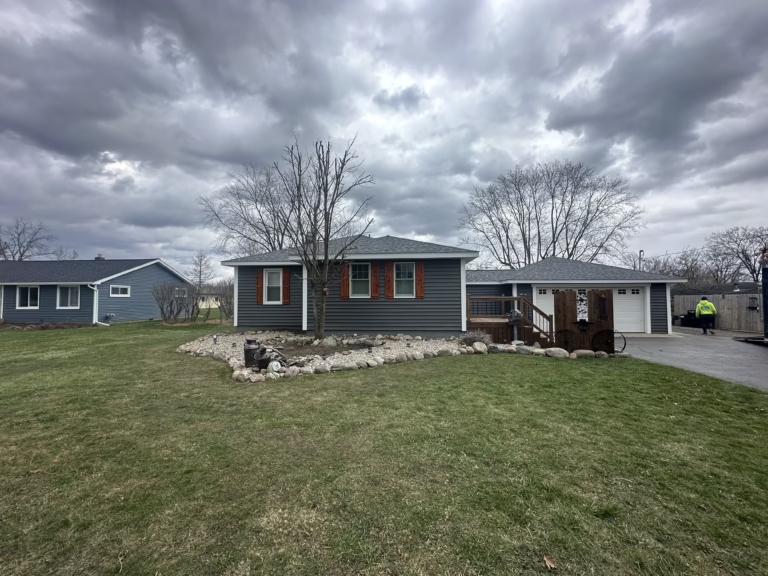
Waterford Michigan
A separating soffit can be a sign that the surrounding roof edge needs attention. At this Waterford home, an opening beneath the rear overhang led us to examine the fascia support, the existing rubber roofing and the way the gutter was attached. We repaired those connected details along the rear eave, then completed the gutter phase.
The opening that started the project
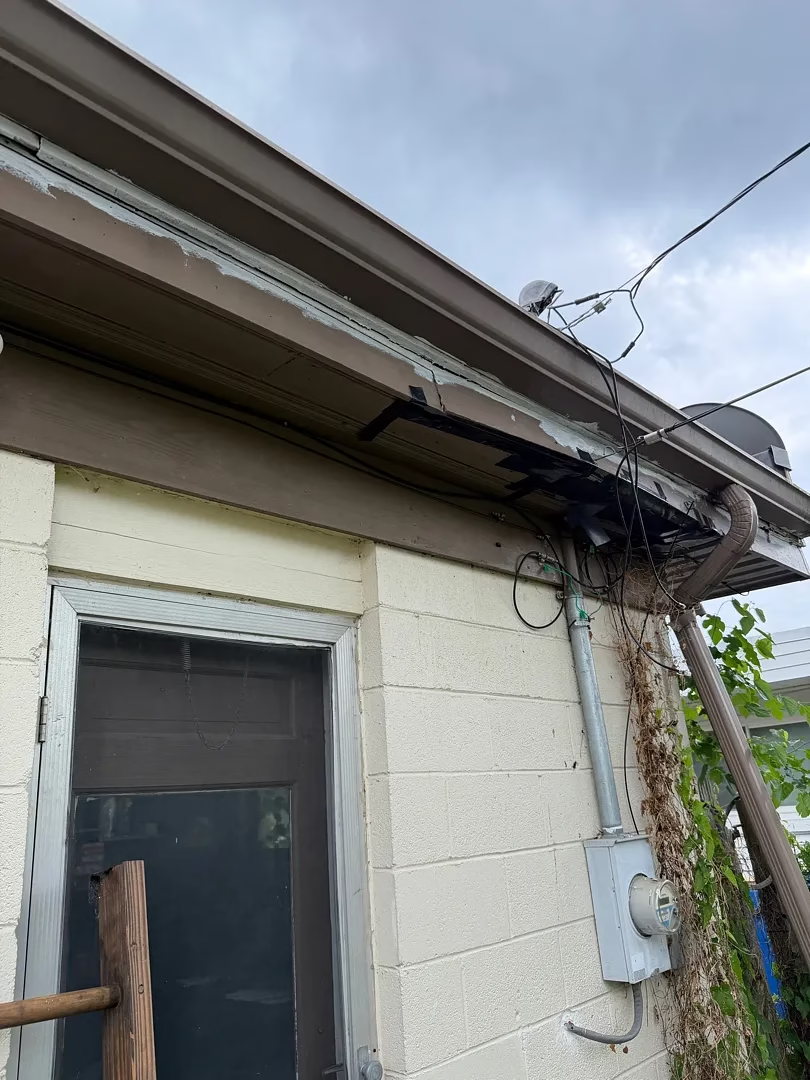
The client contacted The Exterior Zone after the soffit separated near the rear wall and birds entered the opening. A temporary cover helped close the gap, but the underlying assembly still needed investigation.
Soffit is the underside of a roof overhang. Fascia is the board along its outer edge, where gutters are commonly attached. Before closing an opening in this area, we need to understand what moved and what should be supporting it.
During the evaluation, Dillon found a communications cable attached to fascia without adequate backing at that attachment. He identified cable tension as a contributor to the board pulling away. The repair also required a closer look at the roof and gutter connection above it.
Why the roof edge changed the repair
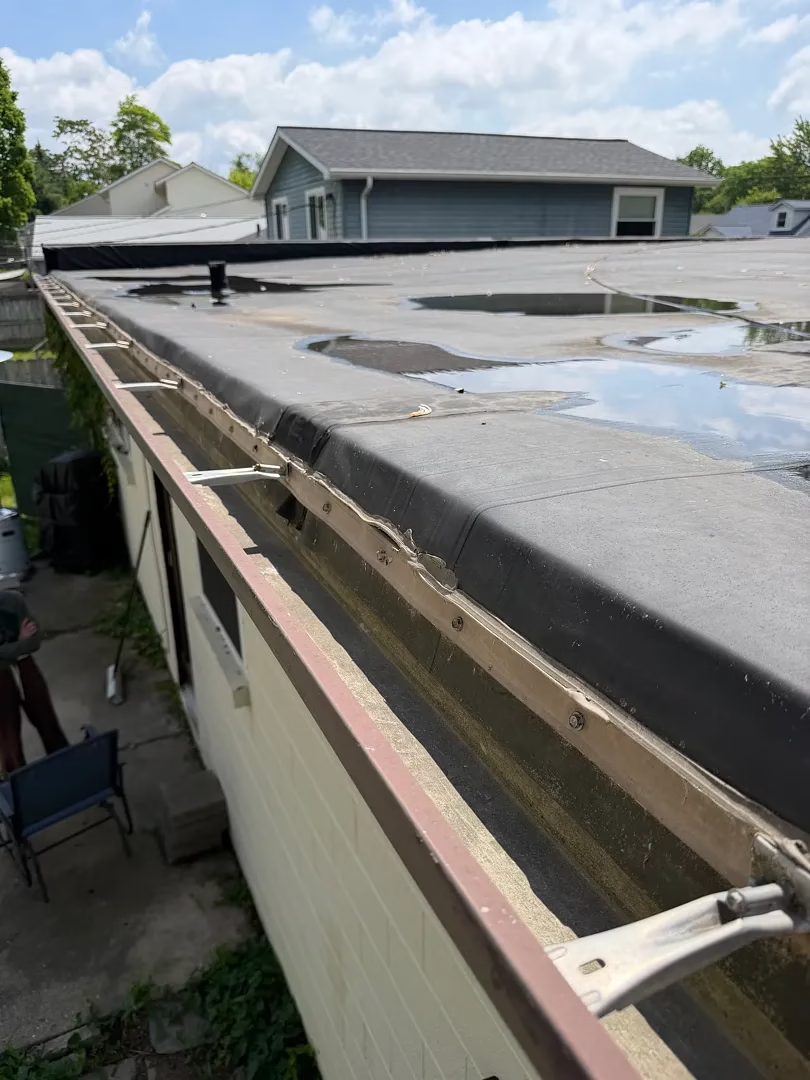
The rear of the home had a low-slope rubber roof. Its edge had been carried into the gutter and secured with a metal termination bar, with gutter fasteners passing through the same area. Replacing the fascia therefore meant working through the roofing and gutter connection as well.
Standing water was visible on the roof during the evaluation. That made the height of the replacement edge detail important: building up the edge could obstruct drainage. The work needed to account for the new metal and membrane connection without creating an unnecessary raised lip.
Once the area was opened, the team found a half-inch recovery board beneath the membrane. They cut it back with a taper, secured the edge, adhered the membrane and installed the new metal and cover strip. The roof-edge work also included patches at transitions and custom metal caps at the ends.
This was a repair to the existing roof edge. It did not replace the entire rubber roof or establish that ponding elsewhere on the roof had been eliminated.
Rebuilding the fascia and soffit
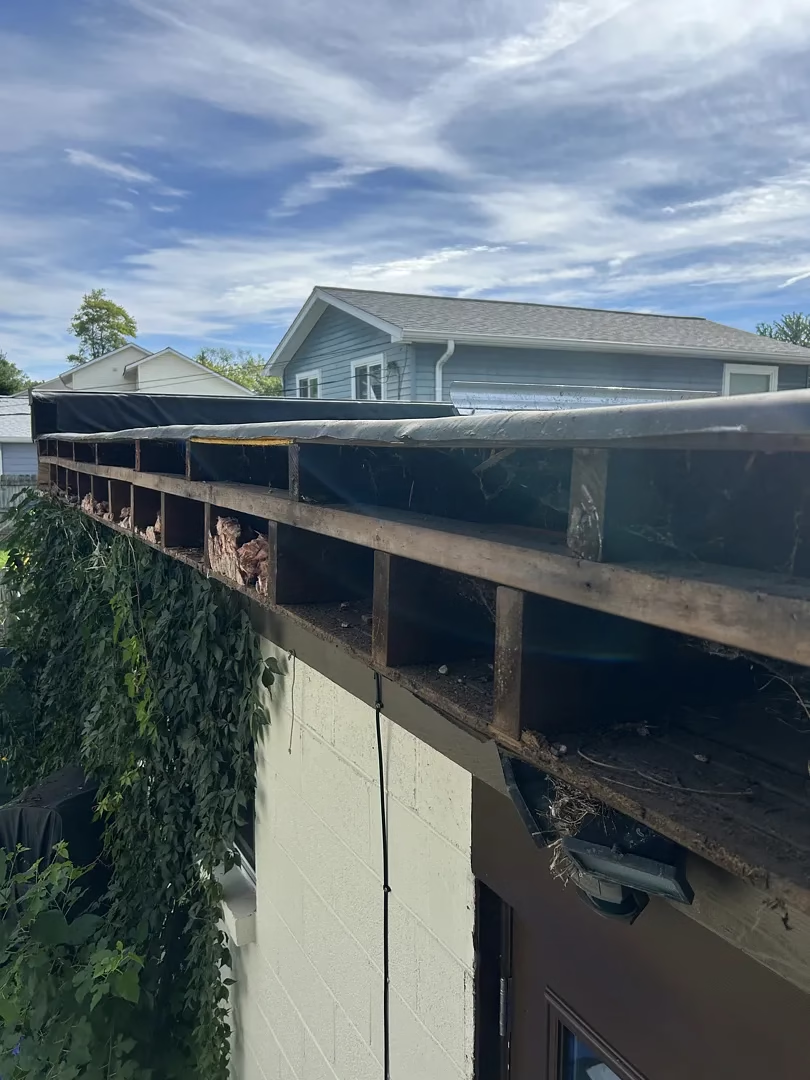
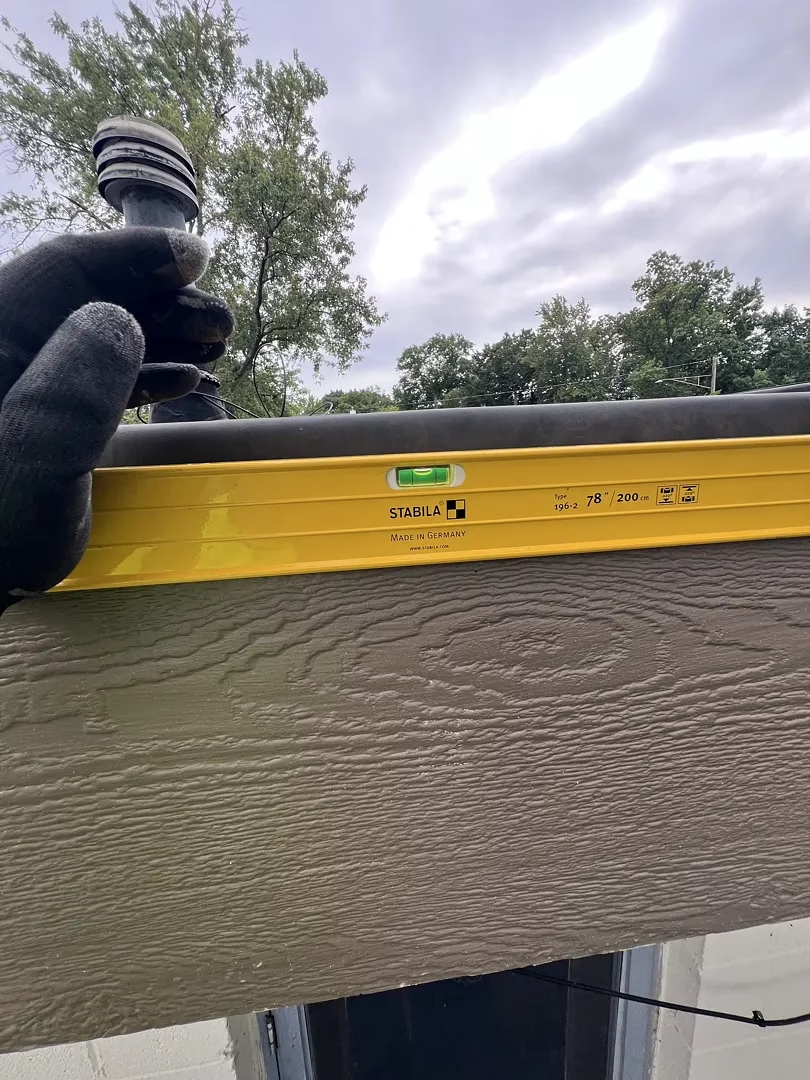
Our team removed the existing fascia and installed new soffit panels and stacked fascia. Additional backing supported the cable attachment, and a pack-out strip supported the upper fascia board. The end trim was shaped to meet the existing side detail, then the new trim was sealed and painted.
Opening the overhang also gave us a chance to check the space behind it. The team confirmed room for airflow and installed new louvered soffit vents. That distinction matters: a vent cover needs an opening and an airflow path behind it to serve its purpose.
The bathroom exhaust outlet received a separate adjustment so it discharged clear of the back of the fascia. Bathroom exhaust and soffit ventilation serve different functions, so each connection needed its own attention.
Completing the drainage connection
The gutter phase followed the carpentry and roof-edge repairs. The project included a new 6-inch seamless aluminum rear gutter and two 3-by-4-inch downspouts. Positioning the gutter beneath the drip edge was part of the plan for connecting the repaired roof edge to the drainage system.
The finished work brought together supported fascia, new soffit panels and vents, a repaired membrane edge and replacement drainage components along the rear eave. The project stayed focused on that affected section of the home.
What homeowners can take from this repair


A gap beneath an overhang deserves investigation before it is covered. The fascia needs sound support, the roofing needs a suitable edge connection, and runoff needs a route into the gutter. Checking those relationships helps define a repair that addresses the affected assembly.
If your soffit is separating or water is running behind a gutter, The Exterior Zone can evaluate the connection and explain what needs attention. Understanding how the parts meet is the starting point for a sensible repair.